
Tenant Management | Call + 44 (0) 207 993 4081
Tenants
At Stonelink International, we give our tenants a clear, structured overview of the entire rental process to ensure complete transparency from offer to move-in.
This guide explains the regulatory standards and key steps for renting or leasing through Stonelink International.
Short on time? Get in touch with our team for a briefing. Call: +44 (0) 207 993 4081 or contact us and let’s get started.
Content
- Tenant Referencing & Documentation
- Statutory Holding Deposits
- Administration / Reference Applications
- Understanding the Assured Periodic Tenancy (APT)
- Initial Monies & Financial Onboarding
- Permitted Tenant Fees & Default Changes
- Client Money Protection
- Operational Management
- Rental Payment
- Statutory Notices
- Inventories
- Security Deposit Returns & Reconciliations
- Tenant Care & Insurance
- Property Inspection
- The Property Ombudsman Code of Practices
- Council Tax, TV License & Utilities
- The Renters’ Rights Act: Essential Tenant Compliance
Tenant Referencing & Documentation
As soon as you have identified a suitable property and your offer has been accepted in principle, you will be invited to complete our secure online referencing application. To ensure a seamless onboarding experience, all applicants must submit verified, high-quality documentation.
Our premier third-party referencing partner, The Lettings Hub, will conduct an extensive verification check. Examples of the primary references and criteria sought include:
-
Employment & Professional Standing: Verifiable confirmation of employment status, position, and continuous salary figures on company letterhead or via digital pay-portal verification.
-
Identity & Statutory Right to Rent: Valid photographic identification (such as a current passport, biometric residence permit, or UK driving licence) to satisfy mandatory statutory Right to Rent checks.
-
Verified History of Residence: Two (2) unique, original proofs of address dated within the last 3 months (e.g., a utility bill, council tax statement, or regulated bank statement).
-
Institutional Landlord References: Formal reference history from your current or most recent managing agent or landlord confirming payment punctuality and property care.
-
Independent & Sponsored Students: For full-time students, a fully vetted, UK-based financial guarantor or verifiable independent proof of upfront educational funding/stipends.
-
Self-Employed Entrepreneurs & Directors: Certified accountant references, formal trading details, registered company accounts, or HMRC self-assessment tax returns spanning the minimum required trading period.
Statutory Holding Deposits
To formally reserve a property and withdraw it from our active marketing channels, a Holding Deposit capped strictly at one (1) week’s rent (not subject to VAT) is required.
The collection of a holding deposit acts as a mutual declaration of good faith and commitment. It provides the financial security necessary for our team to immediately pause viewings and allocate corporate resources toward completing your onboarding infrastructure, including:
-
Canceling or temporarily suspending all active portal and public advertisements for the property.
-
Notifying other active applicants that the property is under offer, subject to contract and referencing.
-
Initiating your comprehensive digital credit, financial, and employment screening.
-
Drafting your bespoke statutory tenancy documentation.
Statutory Refund & Retention Policy
Upon successful execution of your tenancy agreement, the holding deposit will be automatically credited and deducted directly from your first month’s initial rent.
Under the strict provisions of current tenant protection legislation, the holding deposit is fully refundable unless an applicant intentionally withdraws from the proposed letting, fails a statutory Right to Rent check, fails to take reasonable steps to progress the tenancy within the standard 15-day “Deadline for Agreement,” or provides false or materially misleading financial/background information during application.
Administration / Reference Application
The comprehensive costs covering your tenant profile assessment, credit screening, UK guarantor verification, statutory Right to Rent compliance checks, and the preparation/safekeeping of your legal lease paperwork are funded entirely by the instructing landlord.
Transparency Directive: It is imperative that you disclose all relevant background facts (including lower-than-required income metrics, active credit issues, or specific move-in date restrictions) openly on your initial offer sheet. Concealing material facts that subsequently cause a referencing failure can result in the statutory forfeiture of your holding deposit.
Understanding the Assured Periodic Tenancy (APT)
All private residential leases in England are legally structured as Assured Periodic Tenancies (APTs). The traditional system of fixed-term contracts (such as 12-month fixed tenancies) and arbitrary landlord “no-fault” break clauses has been entirely abolished by law.
-
A Continuous Rolling Structure: Your tenancy is an open-ended, continuous rolling agreement from day one. It does not possess a fixed expiration date or a mandatory renewal deadline, providing you with unparalleled security of tenure. You are entitled to remain in the property indefinitely until you choose to end the tenancy, or the landlord obtains a court possession order under strict, legally justified statutory grounds (such as selling the asset or moving back into the premises themselves).
-
Your Statutory Right to Notice: As an occupant under an APT, you possess ultimate flexibility. You hold the legal right to bring the tenancy to an end at any point during its lifecycle by serving a minimum of two (2) months’ written notice to us. Your notice must be timed to expire on the final day of a rental period (typically the day before your standard monthly rent is contractually due).
- The 2-Month Mandatory Notice Window: If your landlord intends to adjust the rent to reflect changes in the wider economy, they must formally serve you with a statutory Section 13 Notice using the mandatory Form 4A.
This notice must provide you with a minimum of two (2) months’ clear written notice before any new figure can take effect.
Legal Representation Disclaimer: Stonelink International acts as a corporate instruction agent for the Landlord. Prior to signing your contract, we will provide you with a sample template agreement for your review. We advise you to read this legal document with care; should you require detailed advice regarding your tenant rights or specific clauses, you are encouraged to seek independent counsel from a legal advisor or organisations like Shelter or Citizens Advice.
Initial Monies & Financial Onboarding
Once your referencing profile has been fully approved by the landlord, the Assured Periodic Tenancy (APT) agreement will be issued for digital signature. The initial move-in monies must be settled in full and show as cleared funds in our client account at least five (5) days prior to your scheduled tenancy commencement date.
Your initial move-in invoice will comprise the following strictly regulated balances, less the one (1) week holding deposit you previously paid:
-
The Security Deposit: Contractually capped under statutory law at a maximum of five (5) weeks’ rent where the total annual rent is under £50,000, or six (6) weeks’ rent where the total annual rent is £50,000 or above. All residential security deposits are registered and held securely within the custodial Deposit Protection Service (DPS)
www.depositprotection.com -
First Month’s Rent in Advance: Calculated precisely on a per-calendar-month (PCM) basis using the standard industry formula:
Weekly Rent × 52 weeks / 12 months = Per Calendar Month Rent
-
Methods of Settlement: To avoid processing delays, payments must be executed via BACS, CHAPS, or an electronic direct bank transfer. We do not accept cash or credit card settlements for initial move-in balances.
Permitted Tenant Fees & Default Changes
In strict compliance with the Renters’ Rights Act and tenant protection legislation, Stonelink International operates a zero-fee model for standard applications. Tenants cannot be charged for viewings, referencing, or contract creation.
The only contractually enforceable fees, variations, and default charges applicable to a tenancy are outlined below:
-
Contract Variations & Amendments: If a tenant requests a formal structural alteration to the tenancy agreement after execution (such as arranging a change of sharer/roommate replacement or altering specific pet covenants with the landlord's consent), a statutory fee of £50.00 + VAT (£60.00 Inc. VAT) per event will be applied to cover the administrative execution, re-referencing, and updated Right to Rent compliance checks.
-
Late Rent Default Interest: By law, default interest can only be levied once a rental payment has remained outstanding for 14 days or more from its contractual due date. The interest rate is strictly capped at 3% above the Bank of England's base rate, calculated daily for each day the balance remains uncleared, backdated to day one.
-
Lost Keys or Security Access Devices: If a tenant loses a key, fob, or smart security device giving access to the building or property, a default charge will be applied equivalent to the actual, verifiable cost of cutting the replacement item or replacing the lock mechanism if security is compromised. No administrative markups are permitted.
-
Early Termination Cost Recovery: Because fixed terms have been abolished, early termination fees only apply in highly specific scenarios where a tenant requests to exit a rolling agreement outside their standard statutory notice window and the landlord mutually consents. This charge cannot exceed the actual financial loss suffered by the landlord or the reasonable operational costs incurred by the agent to re-market and relet the property early.
-
Non-Assured / Corporate Tenancies: For properties let to corporate entities, companies, or non-assured agreements falling outside the scope of the Renters' Rights Act, a fixed administrative and referencing fee of £250.00 + VAT per person applies (capped at the first 4 occupants)
Client Money Protection

Stonelink International (London) Limited operates under the highest tiers of corporate financial governance. We provide complete Client Money Protection (CMP) for both landlords and tenants, ensuring all rental income, holding balances, and deposits are ring-fenced and fully indemnified.
We are a fully accredited member of Client Money Protect (CMP).
https://www.clientmoneyprotect.co.uk/Click here and view our Client Money Protect Certificate
Membership number: CMP003887
Operational Management
-
Managed Properties Contact Protocol: If Stonelink International is instructed to fully manage your property, you will be formally notified prior to move-in. For managed portfolios, our office is your exclusive point of contact for all day-to-day enquiries, appliance faults, structural concerns, and emergency maintenance.
-
The Reporting Directive: Tenants hold an active duty to report any property defects or leaks immediately. Failure to report a developing or ongoing issue (such as an unaddressed slow water leak that subsequently damages structural flooring) may shift the legal and financial onus of repair onto the tenant due to negligence.
Please immediately report any problems you feel need attention by calling on:
+44 (0) 207 993 4081 or contact us
Rental Payment
- Rental Payment Execution: All ongoing monthly rental payments must be executed via an automated Standing Order mandated from your bank account. For standard lets, rental payments are routed directly to the landlord’s account, unless the landlord has subscribed to our Rent Collection service. In those instances, just like with our Fully Managed properties, payments are routed securely into the Stonelink client account.
- The 2-Month Mandatory Notice Window: If your landlord intends to adjust the rent to reflect changes in the wider economy, they must formally serve you with a statutory Section 13 Notice using the mandatory Form 4A.
This notice must provide you with a minimum of two (2) months’ clear written notice before any new figure can take effect.
Statutory Notices
Tenants:
- Notice to Conclude a Tenancy: Under the continuous rolling structure of an Assured Periodic Tenancy (APT), you possess the statutory right to bring your tenancy to an end at any point by serving a minimum of two (2) months’ written notice via email or post. Your notice must be timed precisely to expire on the final day of a rental period (the day prior to your standard rent due date).
- The 2-Month Mandatory Notice Window: If your landlord intends to adjust the rent to reflect changes in the wider economy, they must formally serve you with a statutory Section 13 Notice using the mandatory Form 4A.
This notice must provide you with a minimum of two (2) months’ clear written notice before any new figure can take effect. - Alignment with Open Market Values or the CPI Index: The proposed adjustment cannot be an arbitrary penalty or auction-style spike.
By law, any proposed new rent must accurately match the open market value for comparable properties of a similar size, condition, and location within your immediate neighbourhood or the CPI Index. - Your Right to Tribunal Appeal: If you receive a Form 4A notice and feel the proposed rent exceeds the true local market value, you possess the absolute statutory right to challenge it.
You can refer the notice to the independent First-tier Tribunal (Property Chamber) free of charge at any point during your 2-month notice window. - Under the Assured Periodic Tenancy (APT) structure, your right to occupy the property is fully protected by law. A landlord can no longer issue a notice to quit simply because a certain timeline has passed. To reclaim possession of the property, a landlord must follow strict statutory procedures and serve a formal Section 8 Notice (using the mandatory Form 3A) based on specific, legally defined grounds.
When a Landlord Can Legally Reclaim Possession:
The law balances tenant security with the landlord’s right to manage their asset. A landlord is permitted to serve a possession notice under two distinct categories of statutory grounds:
-
No-Fault Mandatory Grounds (Subject to a 12-Month Immunity Window): If a landlord wishes to sell the property or requires the property to move back into it themselves (or for an immediate family member), they must serve a minimum of two (2) months’ written notice. However, by law, landlords are strictly prohibited from using these grounds during the first 12 months of your tenancy, giving you a guaranteed year of initial security.
-
Tenant-Fault Grounds (Enforceable at Any Time): If a tenant breaches the terms of the agreement—such as accumulating severe and persistent rent arrears (typically two months or more), engaging in documented anti-social behaviour, or causing serious structural damage to the property—the landlord has the immediate right to serve a Section 8 Notice. The notice period for these grounds varies from immediate effect to 14 days, depending on the severity of the breach, and does not carry a 12-month immunity cushion.
Our Role as a Regulated Agent: Stonelink International is committed to ensuring absolute legal fairness. We ensure that any notice issued on behalf of a landlord strictly complies with current statutory timelines, features the correct government-mandated paperwork, and provides you with the clear, contractually required notification windows
Importance of Independent Inventories
Securing an independent, professional inventory is the single most effective safeguard for your tenancy. Under statutory guidelines, tenants are contractually required to return the property and its contents in the same condition and standard of cleanliness as documented when they moved in – excepting normal wear and tear.
The Blueprint for Your Tenancy: A professional inventory and Check-In report provides an exact, detailed description of your home’s physical state and fixtures at move-in.
Why Impartiality Matters: At Stonelink International, we exclusively utilise independent, third-party professional inventory clerks. Under current judicial frameworks and deposit adjudication rules, self-made reports are routinely dismissed as biased. An unbiased, third-party report provides an authoritative audit trail that is fully recognised by courts and deposit tribunals alike.
The Check-Out Process: When you choose to end your rolling tenancy, a corresponding Check-Out inspection is performed.
Strict Statutory Windows for Amendments: In accordance with the Association of Independent Inventory Clerks (AIIC) regulations, both landlords and tenants are granted a strict 7-to-14-day statutory review window (typically finalised within 7 days of receipt) upon the distribution of any digital Check-In or Check-Out report. Any requested revisions, queries, or supplementary photo evidence must be submitted in writing within this period before the document becomes a legally binding record of the property’s condition.
Security Deposit Returns & Reconciliations
The return and final reconciliation of your security deposit are protected by strict statutory timelines under the Renters’ Rights Act and managed directly through an evidence-based framework.
-
Continuous DPS Custodial Protection: Your security deposit remains safely ring-fenced inside the Deposit Protection Service (DPS)
www.depositprotection.com -
Surrender of Keys & Independent Checkout: On the precise day your tenancy concludes, a comprehensive physical inspection of the premises is conducted by an independent professional inventory clerk. All property keys must be returned and signed out at this time.
-
The Review & Dispute Window: Once the official Checkout Report is generated, both you and the landlord have a standard 14-calendar-day window under industry regulations to raise queries, submit clarifications, or request necessary adjustments to the clerk’s findings.
-
The 10-Day Statutory Return: Once a final deduction figure is mutually agreed upon in writing by both parties, the undisputed portion of your deposit must legally be released and returned to your account within 10 working days.
-
Alternative Dispute Resolution (ADR): If an agreement cannot be reached regarding property damage or cleaning shortfalls, you have the absolute right to reject the landlord’s claim. The dispute will be escalated to the independent DPS adjudication board. Both parties will be given a set period to upload time-stamped photos, check-in reports, and invoices. The independent adjudicator’s final decision is legally binding on all parties.
Your Rights Guide: To review evidence thresholds, see what counts as normal wear and tear versus tenant damage, or learn how to submit a claim, please consult the official DPS guidance. Click on this link: DPS – An Introduction to Disputes and Damages
Tenant Care & Insurance
-
The Duty of Care & Seasonal Safety: Tenants have a contractual duty of care to return the property at checkout in the same pristine condition as documented on the initial Check-In Inventory, fair wear and tear excepted. During winter cycles, tenants must ensure the property remains sufficiently heated to prevent the freezing or bursting of internal water and heating pipework.
-
Personal Belongings & Insurable Risks: The landlord’s building insurance policy strictly excludes coverage for a tenant’s personal effects, clothes, and electronic devices. Tenants are strongly advised to secure comprehensive Tenants’ Contents Insurance to protect their personal belongings against accidental damage, fire, theft, or internal leaks, as the landlord and agent accept zero liability for damage to an occupier’s personal assets.
Property Inspection
Periodic Property Inspections: For fully managed instructions, our management team will conduct periodic structural property inspections to evaluate the general upkeep of the asset. These are never unannounced; we will always contact you in advance to schedule a mutually convenient time.
The Property Ombudsman Code of Practices


Stonelink International (London) Limited is a member of The Property Ombudsman Scheme (TPO) and we adhere to the following;
Section 14 of the TPO Code of Practice for Residential Estate Agents
Click the link and download the guide: https://stonelinkinternational.com/wp-content/uploads/2025/04/tpo-residential-estate-agents.pdf
Section 19 of the TPO Code of Practice for Residential Letting Agents
Click the link and download the guide: https://stonelinkinternational.com/wp-content/uploads/2025/04/tpo-residential-lettings-agents.pdf
Complaints
As your Agent we aim to perform on instructions from our Clients in an efficient manner.The Agent hopes that the Client will not need to complain but recognises that in isolated circumstances there may be complaints.
Click Complaints Procedure for a copy of our Complaints Procedure.
Our TPO Agent Membership ID: D7618-0
Council Tax, TV License & Utilities
-
Utility & Council Tax Reconciliation: It is the tenant’s absolute legal responsibility to contact all relevant utility providers (gas, electricity, water, broadband/telephone, and
BBC TV Licensing) at the commencement of the tenancy to open accounts, register meter readings, and pay all consumable outgoings promptly. -
Student Council Tax Exemptions: Full-time students who qualify for a local authority Council Tax exemption are solely responsible for obtaining their official university enrolment certificate and submitting it directly to the Local Authority to claim their exemption at move-in.
The Renters’ Rights Act: Essential Tenant Compliance
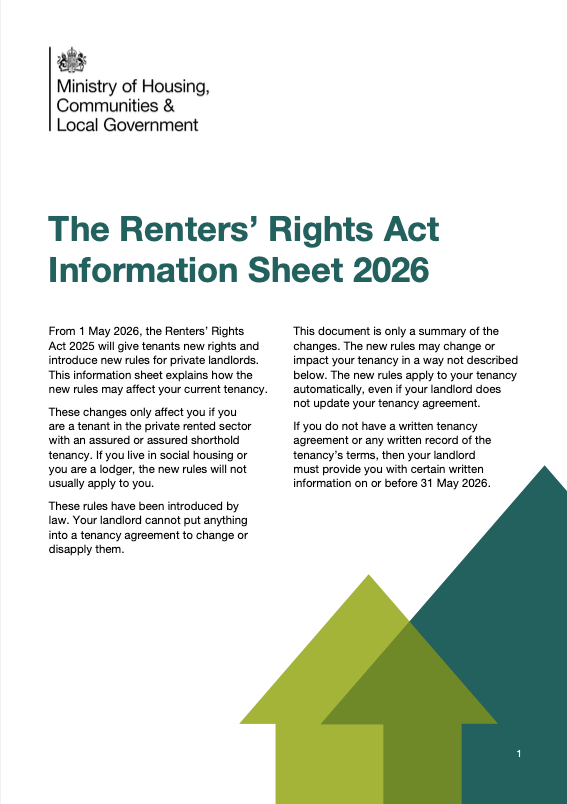
The Renters’ Rights Act has introduced historic statutory protections across the private rented sector, significantly expanding your legal rights as a tenant and introducing strict safety nets to ensure your peace of mind.
As a Stonelink International tenant, these modern regulations directly safeguard your security of tenure and financial transparency:
-
Your Right to Information (Mandatory Disclosure): Landlords are legally mandated to provide you with an official, comprehensive statutory disclosure document. This vital framework details your protections against arbitrary eviction, limits how rent can be reviewed, secures your right to request a pet, and confirms your transition into a flexible, rolling tenancy structure.
-
The Absolute End of Section 21 “No-Fault” Evictions: Under these rules, you can no longer be asked to leave a property simply because a fixed-term contract has concluded. A landlord can only seek possession of the property by serving a formal notice under specific, strictly verified statutory grounds (such as selling the property or moving back into it themselves).
-
Prohibition of Unfair Bidding & Clear Rent Reviews: Landlords and agents are legally prohibited from encouraging or inviting rent bidding wars. Furthermore, any proposed rent adjustments must follow a transparent, statutory path using a Section 13 notice, giving you the right to challenge unfair increases at a First-tier Tribunal.
-
Strict Landlord Penalties for Non-Compliance: These transparency rules apply universally to all standard written agreements, including older tenancies that converted from the old Assured Shorthold Tenancy (AST) system. Local authorities monitor these mandates aggressively; a landlord’s failure to serve you the required statutory information sheets carries heavy civil penalties of up to £7,000 per breach.
Official Statutory Information
To understand exactly how these modern frameworks insulate your home, protect your tenancy, and dictate your rights regarding pet requests or notice periods, you can review the official government guidance: Download the official
directly from the UK Government portal. Renters’ Rights Act Information Sheet